Showing posts with label climate mitigation. Show all posts

Wednesday, April 18, 2018

Why farm sustainably?

Last August before returning to the US, three of us from the E-CARE office in Santiago traveled to San Mateo, Isabela to attend the Phillipine Rice Research Institute’s (PhilRice) Farmer Training School, and to present on how rice cultivation contributes to climate change.


The week prior, we had dropped by PhilRice’s local office to share with them our project idea and talk about alternate wetting and drying (AWD), a sustainable irrigation technique. They were supportive of our initiative and praised AWD for its water-savings benefits and invited us to present on the reciprocal relationship between rice farming and climate change.
Controlled Irrigation: Promotes the right timing of field irrigation, lessens water usage, reduces methane emissions


So we arrived yesterday morning to the open warehouse-type space at PhilRice’s demo farm where 30 farmers were gathered to learn the best practices on land preparation, fertilizer management and greenhouse gas mitigation. During our presentation, I shared with the farmers a brief overview of the mechanics of climate change, the methane cycles in dry vs. flooded fields, and the UN’s approved methodology for calculating emission reductions.


But why is sustainable rice farming so important?


For one, rice is a daily staple for 3.5 billion people (19% of global dietary energy) and a livelihood for 1 billion. As the world’s population increases, so must rice production to meet food security needs. But not without an impact on climate change. Looking back in the past 50 years, GHG emissions from agriculture have doubled.


Rice farming accounts for 10% of the world’s emissions from methane, which is 25x more potent than CO2 in trapping heat in the atmosphere. In Philippines alone, rice farming accounts for 13% of GHG emissions, and all agriculture is responsible for 30% of emissions here. Thankfully the country is working towards meeting its commitment to reduce emissions by 70% by 2030.


AWD is a part of that effort. One hectare of flooded rice fields emits more than 30 tonnes CO2e per year. But by using AWD, field emissions are reduced by nearly 50%.


GHG mitigation isn’t the only benefit, but water conservation is significant as well. While rice occupies 30% of the world’s agricultural land, it uses 40% of irrigation. So using AWD to conserve water by 30% can make water available for household use, industry or more agriculture.
Sharing the same presentation mentioned above to a farmer group at St. Mark's Episcopal Church in Batal, Santiago, Isabela.

Thursday, August 10, 2017

Rice for the World

Last post, we learned about rice cultivation's environmental impact. But there is hope for a solution! Alternate Wetting and Drying (AWD) -- it’s an irrigation technique which reduces methane emissions by 50% and water usage by 30%.

In traditional rice cultivation, the fields remain continuously flooded during growing season. The organic matter in the soil (straw, manure, etc) decomposes anaerobically (without air) and releases as a byproduct, methane, a greenhouse gas 25x more potent in greenhouse warming effect than carbon dioxide (CO2).


Transplanting rice in a flooded field -- hard work!

In AWD, the water level is allowed to drop to 6 inches below the top of the soil before irrigating again to 2 inches above soil level. This process of drying the soil and irrigating continues until harvest. Since the soil is allowed to dry periodically, the organic matter decomposes with the help of oxygen, preventing methane from being produced.

This practice has proven to have no negative impact on yield; in fact, in some cases, yields increased. Farmers have also reported that the roots have better anchorage (making them typhoon-resistant). Grains also have a good shape and size, with lower trace amounts of arsenic that naturally occurs in rice.

Moreover, AWD practice reduces methane emissions by 50% on average and decreases water use by 30%. It’s a win-win situation for climate change mitigation and adaptation. Not only are farmers reducing their greenhouse gas emissions, but they are also adopting a climate-smart technique which will better prepare them for water scarcity which climate change may bring.

With decreased water usage, farmers save money in cases where they use diesel-pumped irrigation systems. AWD also decreases conflict between farmers since there is less likelihood of experiencing a water shortage.

The main challenge to implementing AWD will be to break farmers’ deeply entrenched belief that rice is an aquatic plant that needs to be continuously flooded. No easy task where almost all the rice fields are cultivated by smallholder farmers with 1.2 hectares each on average and have been growing rice for generations.

However, AWD has been gaining ground. It’s being adopted in China, Vietnam, Myanmar and Indonesia. In the U.S., too! In fact, the world’s first carbon credits from AWD in rice cultivation were generated just last month by farmers in Mississippi, Arkansas and California. 

The 5th Mark of Mission of the Anglican Communion guides us in our calling “to strive to safeguard the integrity of creation and sustain and renew the life of the earth.” We can live into this mission wherever we are and in whatever we do, whether we are farmers or office workers. For farmers, this means cultivating the land in the best way possible. For an office worker, it may mean shutting down computers to save electricity, turning off lights, reducing waste and recycling and composting at work. Everyday, we have the opportunity to show thanks to God for the beauty and resources He gives us by being good stewards of His creation. Let’s show it!

Thursday, July 27, 2017

Climate Change for an Island Nation

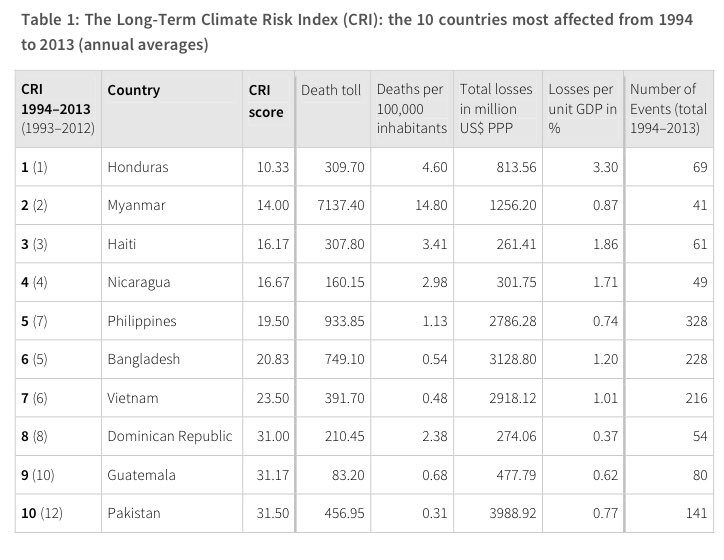
In 2012, Philippines was ranked the most vulnerable country in the world to climate change by a German organization. In 2013, we fell to #5, but take a look at the list here and think: who pollutes, and who pays?


Philippines and other tropical, developing countries are positioned to suffer from from the impacts of climate change in terms of fatalities and economic loss from climate-related disasters. 

For Philippines, climate change is expected to bring rising mean temperatures, change in amount and intensity of rainfall, and a change in the number of tropical cyclones. 

The agricultural industry (which accounts for 11% of GDP) is particularly vulnerable since it relies on traditional knowledge and predictable weather patterns. Twelve million Filipinos, or 30% of the labor force, sustain their livelihood in agriculture. A land-owning farmer has about 1.2 hectares, on average. 

For these smallholder farmers, climate change could bring decreased productivity and increased pests and plant disease, which may affect yields. This would be devastating for a farmer, living in poverty, whose entire livelihood is dependent upon the climate.

Thankfully, Philippines is mobilizing to act on climate. Climate change is no joke to Filipinos; they experience it firsthand. With the Filipino environmental ethic, people conserve resources and take pride in being good stewards of the Earth.

For one, the E-CARE Foundation partners with communities and Episcopal Relief and Development to plant trees to absorb carbon dioxide. 

Stay tuned for the next post to explore what other options for climate change mitigation and adaption Philippines is developing!