Wednesday, May 23, 2018

Celebrating the life of Fr. Mark Ventura

Human rights, indigenous rights and environmental integrity were the advocacies of Fr. Mark Ventura, a Catholic priest who was shot dead earlier this month while blessing children after Sunday mass. His death’s investigation is still pending, yet his activism against mining interests are a likely reason vested interests would want to off him.


I accompanied the contingency of Episcopal priests who traveled to Tuguegaerao to attend the ecumenical service the following Sunday. Speakers praised Fr. Ventura’s life work of attending to the most marginalized communities in the Cagayan Valley and advocating for their rights and wellbeing in the face of mining companies.


Fr. Ventura’s murder fits into a larger picture of targeting environmental and human rights activists. Four months prior, another activist Catholic priest was assassinated. Last year, a vocal bishop was detained as a political prisoner. The government released a list of 600 names of ‘suspected terrorists’ including NGO workers and even UN special rapporteur and human rights advocate, Vicki Tauli-Corpuz. On top of that, the number of extra-judicial killings under the Duterte administration has reached 14,000.


“This administration has gone on for too long allowing extra-judicial killings in the name of anti-drug and anti-terrorist activities,” one priest emphatically pronounced.


Referring to Fr. Ventura’s enemies, another clergy leader raised a good point: “if these people will kill an ordained servant in Christ’s church, then we can be certain they will not hesitate to disregard the rights of the most marginalized among us.”


Inspiring the packed room of family, friends and supporters of Fr. Ventura’s cause, Bishop Wandag of the Episcopal Diocese of Santiago remarked that although Fr. Mark Ventura was killed, his life’s work will not die. The people will not be deterred by intimidation and continue to advocate for community rights and wellbeing.


On the other hand, President Duterte, attempting to discredit the belief that this assassination is related to Fr. Ventura’s activism, has accused the priest of being a womanizer. He even presented a matrix of women he’s accusing the Catholic priest of sleeping with, although previous matrices of his have been found incorrect.


The community is still seeking justice for their beloved priest. Meanwhile, NGOs and communities are still organizing to continue Fr. Mark Ventura’s legacy, championing indigenous rights, sustaining creation and the wellbeing of communities over pollution-related profits.

Wednesday, April 18, 2018

Why farm sustainably?

Last August before returning to the US, three of us from the E-CARE office in Santiago traveled to San Mateo, Isabela to attend the Phillipine Rice Research Institute’s (PhilRice) Farmer Training School, and to present on how rice cultivation contributes to climate change.


The week prior, we had dropped by PhilRice’s local office to share with them our project idea and talk about alternate wetting and drying (AWD), a sustainable irrigation technique. They were supportive of our initiative and praised AWD for its water-savings benefits and invited us to present on the reciprocal relationship between rice farming and climate change.
Controlled Irrigation: Promotes the right timing of field irrigation, lessens water usage, reduces methane emissions


So we arrived yesterday morning to the open warehouse-type space at PhilRice’s demo farm where 30 farmers were gathered to learn the best practices on land preparation, fertilizer management and greenhouse gas mitigation. During our presentation, I shared with the farmers a brief overview of the mechanics of climate change, the methane cycles in dry vs. flooded fields, and the UN’s approved methodology for calculating emission reductions.


But why is sustainable rice farming so important?


For one, rice is a daily staple for 3.5 billion people (19% of global dietary energy) and a livelihood for 1 billion. As the world’s population increases, so must rice production to meet food security needs. But not without an impact on climate change. Looking back in the past 50 years, GHG emissions from agriculture have doubled.


Rice farming accounts for 10% of the world’s emissions from methane, which is 25x more potent than CO2 in trapping heat in the atmosphere. In Philippines alone, rice farming accounts for 13% of GHG emissions, and all agriculture is responsible for 30% of emissions here. Thankfully the country is working towards meeting its commitment to reduce emissions by 70% by 2030.


AWD is a part of that effort. One hectare of flooded rice fields emits more than 30 tonnes CO2e per year. But by using AWD, field emissions are reduced by nearly 50%.


GHG mitigation isn’t the only benefit, but water conservation is significant as well. While rice occupies 30% of the world’s agricultural land, it uses 40% of irrigation. So using AWD to conserve water by 30% can make water available for household use, industry or more agriculture.
Sharing the same presentation mentioned above to a farmer group at St. Mark's Episcopal Church in Batal, Santiago, Isabela.

Monday, March 26, 2018

Back to the Philippines!

After a spell in the States, I’m back in Santiago City, Isabela Province in the Philippines! I’ve been back only one week so far but have hit the ground running with our sustainable rice cultivation project promoting the alternate wetting and drying (AWD) irrigation technique (which reduces methane emissions by 50% and uses 30% less water!).

Getting lost on a community visit to Diduyon, Quirino Province
Along with fellow E-CARE (Episcopal Community Action for Renewal and Empowerment) staff and the Bishop of the Diocese of Santiago, we visited several rural communities for organization development meetings and Receivers to Givers (R2G) fund disbursement. Being situated in the mountains, this required some off-roading and a bit of getting lost on provincial roads but were rewarded with views of green mountains as far as the eye can see.

This tour, I’ve been active with the video camera, interviewing farmers from E-CARE partner communities, capturing harvest time with new mechanization and even touring one of the largest rice mills in the world back in Lake Charles, Louisiana. Stay tuned!  

Thursday, August 10, 2017

Rice for the World

Last post, we learned about rice cultivation's environmental impact. But there is hope for a solution! Alternate Wetting and Drying (AWD) -- it’s an irrigation technique which reduces methane emissions by 50% and water usage by 30%.

In traditional rice cultivation, the fields remain continuously flooded during growing season. The organic matter in the soil (straw, manure, etc) decomposes anaerobically (without air) and releases as a byproduct, methane, a greenhouse gas 25x more potent in greenhouse warming effect than carbon dioxide (CO2).


Transplanting rice in a flooded field -- hard work!

In AWD, the water level is allowed to drop to 6 inches below the top of the soil before irrigating again to 2 inches above soil level. This process of drying the soil and irrigating continues until harvest. Since the soil is allowed to dry periodically, the organic matter decomposes with the help of oxygen, preventing methane from being produced.

This practice has proven to have no negative impact on yield; in fact, in some cases, yields increased. Farmers have also reported that the roots have better anchorage (making them typhoon-resistant). Grains also have a good shape and size, with lower trace amounts of arsenic that naturally occurs in rice.

Moreover, AWD practice reduces methane emissions by 50% on average and decreases water use by 30%. It’s a win-win situation for climate change mitigation and adaptation. Not only are farmers reducing their greenhouse gas emissions, but they are also adopting a climate-smart technique which will better prepare them for water scarcity which climate change may bring.

With decreased water usage, farmers save money in cases where they use diesel-pumped irrigation systems. AWD also decreases conflict between farmers since there is less likelihood of experiencing a water shortage.

The main challenge to implementing AWD will be to break farmers’ deeply entrenched belief that rice is an aquatic plant that needs to be continuously flooded. No easy task where almost all the rice fields are cultivated by smallholder farmers with 1.2 hectares each on average and have been growing rice for generations.

However, AWD has been gaining ground. It’s being adopted in China, Vietnam, Myanmar and Indonesia. In the U.S., too! In fact, the world’s first carbon credits from AWD in rice cultivation were generated just last month by farmers in Mississippi, Arkansas and California. 

The 5th Mark of Mission of the Anglican Communion guides us in our calling “to strive to safeguard the integrity of creation and sustain and renew the life of the earth.” We can live into this mission wherever we are and in whatever we do, whether we are farmers or office workers. For farmers, this means cultivating the land in the best way possible. For an office worker, it may mean shutting down computers to save electricity, turning off lights, reducing waste and recycling and composting at work. Everyday, we have the opportunity to show thanks to God for the beauty and resources He gives us by being good stewards of His creation. Let’s show it!

Thursday, July 27, 2017

Climate Change for an Island Nation

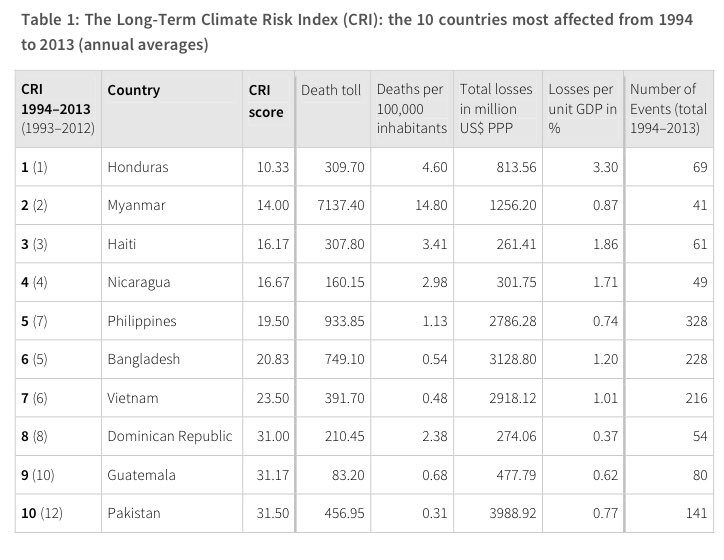
In 2012, Philippines was ranked the most vulnerable country in the world to climate change by a German organization. In 2013, we fell to #5, but take a look at the list here and think: who pollutes, and who pays?


Philippines and other tropical, developing countries are positioned to suffer from from the impacts of climate change in terms of fatalities and economic loss from climate-related disasters. 

For Philippines, climate change is expected to bring rising mean temperatures, change in amount and intensity of rainfall, and a change in the number of tropical cyclones. 

The agricultural industry (which accounts for 11% of GDP) is particularly vulnerable since it relies on traditional knowledge and predictable weather patterns. Twelve million Filipinos, or 30% of the labor force, sustain their livelihood in agriculture. A land-owning farmer has about 1.2 hectares, on average. 

For these smallholder farmers, climate change could bring decreased productivity and increased pests and plant disease, which may affect yields. This would be devastating for a farmer, living in poverty, whose entire livelihood is dependent upon the climate.

Thankfully, Philippines is mobilizing to act on climate. Climate change is no joke to Filipinos; they experience it firsthand. With the Filipino environmental ethic, people conserve resources and take pride in being good stewards of the Earth.

For one, the E-CARE Foundation partners with communities and Episcopal Relief and Development to plant trees to absorb carbon dioxide. 

Stay tuned for the next post to explore what other options for climate change mitigation and adaption Philippines is developing!

Sunday, June 25, 2017

I've moved!

I am now based in Santiago City, Isabela Province!

At the beginning of June, I transferred here to The Episcopal Diocese of Santiago to work on a low-greenhouse gas emission rice farming project. Santiago City, located in the Cagayan Valley, is nestled between the Cordillera Mountains (where I was living) to the West, and the Sierra Madre Mountains to the East. 

A snapshot from the early morning drive from Manila to Santiago:


Although this is a lowland region, many of the E-CARE partner communities are Igorot (from the mountains) who transferred here for greener pastures in the 1970s. The livelihood of most of the E-CARE partner communities here is rice farming. In fact, this region is known second-largest rice-producing area in the Philippines!

The traditional rice cultivation method is to keep the fields continuously flooded throughout the growing period. This creates methane emissions, since the rice straw left on the field doesn't come into contact with the air, so it decomposes anaerobically, emitting methane as a byproduct. 

However, if the fields are allowed to drain enough to dry the top of the soil, methane emissions can be reduced by 50%. This method, known as Alternate Wetting and Drying (AWD), also saves water by about 30%, may increase yields, and promotes food security.

The trick is in outreach to the farmers to break the long-held belief that rice is an aquatic plant. (It is a semi-aquatic plant).

Stay tuned for more updates on the project!


Sunday, May 14, 2017

From Receiving to Giving

The E-CARE program strives to build the self-reliance of its partner communities, and while many projects have succeeded in being operational, they have not been as successful at breaking through “the destructive world views of dependency.” One cause is that large grant funding puts communities in the role of receivers, making them “more helpless and powerless as they realized that they can never generate these amounts by themselves and therefore it was solely upon the grace of others that they have received the same.”

Such has been the experience of the Church’s development program when it first adopted the ABCD approach. Recall the community with the independent spirit from the Cordillera Mountains that we mentioned here. Natives and migrants alike lived in a largely undeveloped area, and through communal and individual efforts, the community cultivated the land and built community infrastructure. The community applied for a grant through the EPC for a water system and post-harvest facilities, with the understanding that after the Church completed the project, the community was responsible for management thereafter. However, when these structures were damaged, the community turned to the Church requesting more funds for repairs.

The “seeds of dependency” were now sown into this once-self-reliant community; large grant funding had taken the place of their entrepreneurial spirit. Ironically, the community’s self-reliant spirit was identified as one of their strength’s during the ABCD asset-identification process. Even the ABCD approach which focused on harnessing a community’s existing strengths “did not and could not fully address the dependency and mendicants problem.”

“ABCD therefore was in danger of becoming just another by-word or concept meant to justify and smoothen the resource flow from external partners to local communities by providing the rationale for the latter to leverage external resources in a manner that was more acceptable to the funding partners but, in the end, did not actually make a significant dent on dependency. ABCD proved “no match” to the well-entrenched culture of dependency.”

In exploring the problem of dependency, a personal anecdote from the National Development Officer shares an experience of the effect of being cast into the “receiver” role:

“The National Development Officer (NDO) attended the General Convention of the Episcopal Church (USA) in Anaheim, California in 2009. Among several meetings attended, he was invited to a reception of the Stewardship Network which was then honoring a Taiwanese priest for his work on stewardship. More specifically, the awardee was being honored for his leadership over a Taipei congregation whose generosity made possible the construction of seven church buildings overseas. It was indeed a remarkable achievement. Prior to the awarding, a video presentation showed the work of this congregation and the church buildings it constructed. When the first of these building flashed onscreen, the NDO gladly recognized it as it was a Church in the ECP. The second church building was likewise in the ECP, and the NDO proudly acknowledged it. When the 3rd, 4th, and 5th buildings were shown, the NDO started feeling very uncomfortable as these were all in the ECP. At the photo of the 6th and 7th churches, the Taiwanese priest was called to the stage and was given a standing ovation but the NDO could not even move and just wanted to disappear from the room. All the seven churches were in the Philippines and he was so ashamed of himself, especially as the video ended with the message that it was more blessed to give than to receive.

Following the awarding, a keynote speaker by the name of Rev. Ed Baker was called to give a message. A brilliant preacher, he talked about the Sea of Galilee as being so full of life from Biblical times and even up to now. He contrasted it to the Dead Sea which, as the name implies, does not allow any living thing within its embrace. The difference between the two, he said, is that the Sea of Galilee receives water from the Jordan River and discharges the same water into the seas while the Dead Sea has an inlet but not an outlet. The Dead Sea only receives but does not give out water. What makes the Sea of Galilee so alive, dynamic and vibrant, Rev. Baker said, is the continuous process of receiving and giving out its waters. Conversely, what makes the Dead Sea “dead” is that it only receives but does not give out. It was at this point that the NDO finally realized the answer to the question of dependency that has eluded the [Development program of the ECP] for more than 20 years.”

What was born from this experience is the Receivers to Givers program, R2G for short, through which communities receive grants to support their development projects and then “grant back” the funds to another community, so while they initially receive, they are then empowered to give.


Only after undergoing the ABCD process, are communities eligible for the R2G program and able to procure E-CARE funds for livelihood assistance or projects like building water or agricultural storage systems. After a determined time period, the community then “grants back” the funds either directly to another community seeking to do a similar project, to itself to do another community project or for E-CARE to hold until another community is ready for their project.

E-CARE works with communities to find a time frame for granting back their funds that works for all involved; no one-size-fits all schemes here. Although, shorter grant back schedules are more favorable because the funds and their benefit is fresh in cooperative members’ minds. If they receive funds to purchase seeds for one agricultural cycle, then when they repay just after harvest, they will have settled their debt at the same time they reap the benefits of the investment, and be able to avail of more funding again. Furthermore, the engagement between E-CARE and the partner communities is more continuous and lessons are learned and incorporated to action more quickly.

While similar to a loan program in regards to providing funds, this program distinctly differs in that the money loaned to a group is not then returned to the loaning organization to do with it what they may, but the funds can be used only for another community project.

Requiring a 100% grant back encourages more efficient and sustainable projects and sustainability for the E-CARE program as the same funds are used again and again. In fact, E-CARE asks for less and less money each year from its external funding partners, the opposite trend of most organizations!

On top of the grant back, during a community’s second funding cycle, they contribute an additional 1.5% of the borrowed amount. From this 1.5%, 0.5% supports the administrative budget of the E-CARE program, 0.5% is offered to the local Episcopal parish, for the organizing work done by the local priest, and 0.5% is returned to the community organization, so they can build up their capital and become more self-reliant. Communities are only assessed a 1.5% rate when they are economically-able to do so, even if this will be after several funding cycles. Compared to the typical 3% - 5% per month on agricultural loans, this rate is a huge relief! While there is no legal requirement to grant back or pay an add-on, no community has refused to do so, excited about the opportunity to share their blessings with others.

At the time the grant-back is due, the community decides where the funds go. They may go back to their community for another project, passed on to another E-CARE community, passed on to another community not yet partnered with E-CARE, or placed in E-CARE’s care to be used for a future community project. E-CARE informs R2G communities about the needs of other groups, and repeatedly, communities are more than eager to gift their grant back to those in need, even granting back ahead of schedule to do so. When funds for a community’s grant request are unavailable, E-CARE may appeal to communities to pay ahead of schedule, which has always been met with a positive response. In many cases, communities do grant back early, even significantly in advance. For example, when Super Typhoon Yolanda (International name, Haiyan) struck the Central Philippines in November 2014, a community in the Northern Philippines announced that it was shortening its repayment period from 2 years to 1 year, in order to assist those impacted. Having so long been trapped in a cycle constantly being only receivers, communities are delighted to be able to share their blessings with others.

Relationships are key in this program. E-CARE and the R2G community must have a steady stream of communication to learn lessons and tackle obstacles, as well as between the R2G communities themselves The granting and receiving communities meet for the pass-on, which is done in a ceremonious way. Communities may mentor one another, as E-CARE sees opportunities for them to share knowledge with one another.

E-CARE’s relationship with its partner communities typically does not just last one project or grant cycle, as one project will not be enough to significantly elevate their economic status out of poverty. Communities may receive multiple grants under the R2G program, as long as they continue to grant-back.

Embracing the opportunity to become givers, communities often grant back significantly ahead of schedule, also providing them the opportunity to receive funds again. Each time the community grants back, with an add on, they are increasing their total capital. Furthermore, community groups also plan that when their collective capital reaches a certain amount, they will reduce the amount of grants they receive from E-CARE and become even more self-reliant.

Quotes and stories here are taken from the E-CARE Manuel of Operations.